Wallpapering in Tallinn and Harju County
Wallpaper removal, wall preparation and precise installation.
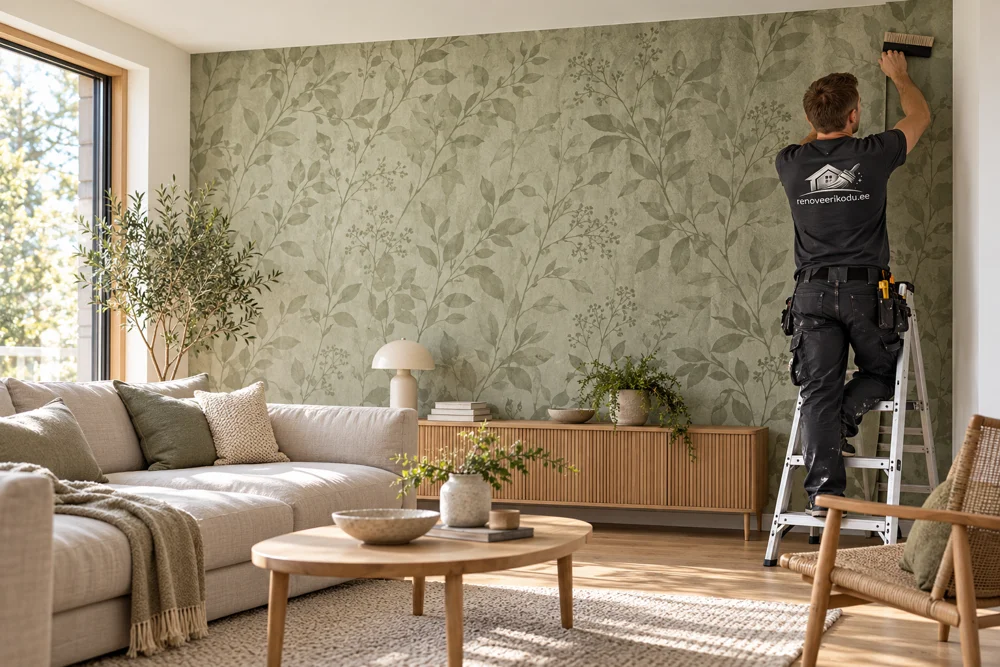
The finished result depends on a smooth, correctly primed substrate. Before preparing a quote, we assess wall repair needs, wallpaper type, pattern repeat and the number of difficult corners and openings.
Wallpapering requires a clean substrate, precise measurement and pattern matching. We install standard and non-woven wallpapers and decorative wall coverings in Tallinn and Harju County.
Before installation, we check whether old wallpaper needs removal, whether the wall needs filling and priming, and how to finish corners, window openings and sockets. The result is a smooth, straight wall surface that suits the room.
What does the service include?
- old wallpaper removal and surface cleaning
- wall filling, sanding and priming
- patterned and non-woven wallpaper installation
- finishing corners, joints and edges
When should you book this service?
Wallpaper suits accent walls, children's rooms, bedrooms or a commercial interior design feature. Quality preparation helps prevent lifting edges and visible substrate defects.
Work process
Wall preparation
We remove loose layers, repair holes and prime the surface so the wallpaper adheres evenly.
Planning the pattern and wallpaper drops
We account for the pattern repeat, light direction and visible edges so that joints are as discreet as possible.
Installation and finishing
We hang the drops straight, remove air bubbles and clean off adhesive residue before it dries.
Wallpapering price and material use
The work involved is affected by wall condition, wallpaper type, pattern repeat and the number of room corners. Patterned wallpaper may require more material because the drops need matching. Before work starts, we assess whether old wallpaper needs removal, whether the wall needs filling and which primer suits the chosen wall covering.
After installation, we check that the drop edges are bonded, the pattern lines up and adhesive residue has been removed. If wallpaper is used on an accent wall only, precise layout helps avoid placing cuts in the most visible areas.
Local experience and agreeing the scope of work
Wallpapering gives the best result with a measured work sequence: the old layer is removed, the wall is repaired, and only then is the new finish installed. When assessing an enquiry, we always review site access, whether the room is occupied, which surfaces need protection and a sensible work sequence. This helps prevent a stage from having to be reopened or repaired later.
Before starting, we provide a clear, realistic estimate. If photos are not enough, we arrange a site visit. This lets us agree on materials, timing, related work and potential risks before the project begins.
When choosing wallpaper, we recommend considering the room's light, furniture and wall flatness. Very thin or glossy wallpaper makes substrate defects more visible, so proper filling and priming can be as important to the result as the wallpaper itself.
Wallpapering prices
The price of wallpapering depends on the wallpaper type, pattern repeat, wall preparation and room corners. Patterned or thin wallpaper requires more precise substrate preparation because defects may become more visible after installation.
For a faster quotation, please include photos, measurements, the site location and your preferred deadline where possible. This helps us determine whether a site visit is needed or an initial estimate can be based on your description.
Practical information about wallpapering
Materials
The result depends on wallpaper type, adhesive, substrate absorbency and pattern repeat. Non-woven, vinyl and paper wallpapers behave differently during installation.
Time required
Wall preparation determines the time required. If the surface needs filling, sanding and priming, drying times must be allowed for before wallpaper installation.
Pricing factors
The price is affected by pattern matching, the number of walls, window and door openings, corner condition and whether old wallpaper needs removal.
Common mistakes
Common mistakes include installing over old adhesive or loose wallpaper, skipping primer and pattern misalignment when the first drop is not exactly plumb.
Advice for customers
Buy extra wallpaper, especially when it has a pattern. Keep the roll batch numbers, because colours from different batches may differ on the wall.
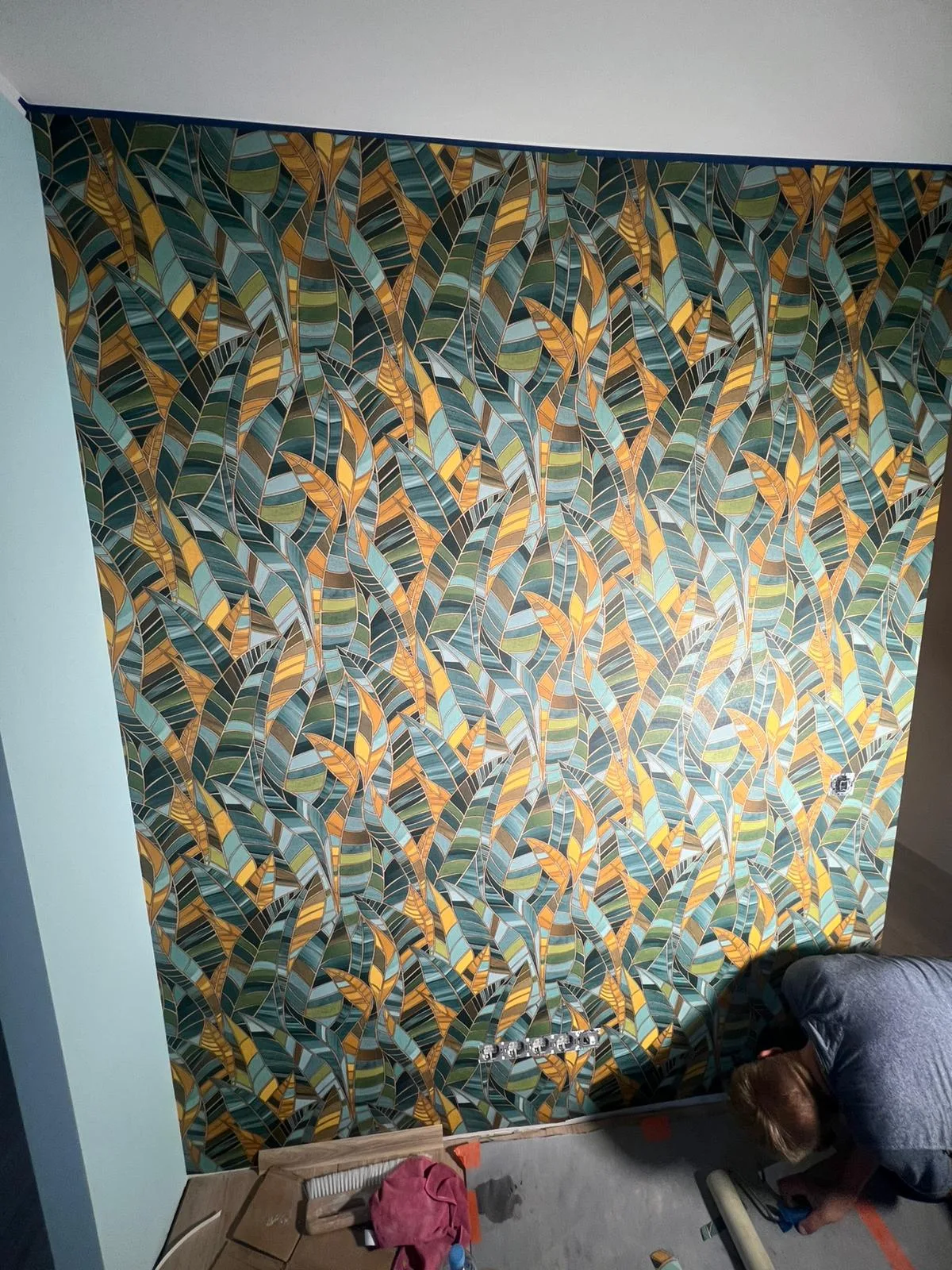
Which wallpaper and adhesive suit your wall?
Non-woven wallpaper
For dimensionally stable non-woven wallpaper, adhesive is usually applied to the wall. This allows the drop position to be adjusted without pre-soaking the paper. However, the installation method is determined by the roll markings. Thin or light-coloured wallpaper needs a smooth substrate of uniform colour; wallpaper does not replace filling.
Paper and vinyl wallpaper
Paper wallpaper may require adhesive on the drop and the specified soaking time. Vinyl describes the top layer: the backing may be paper or non-woven, and this determines the gluing method. We check the washability rating on the packaging. Ordinary wallpaper is not a suitable finish for the wet area of a shower enclosure.
Photo and textile wallpaper
For photo wallpaper, we check the full image dimensions, drop sequence and trimming allowance before gluing. Adhesive for textile and specialist coverings is chosen according to the covering manufacturer's instructions, because excess adhesive or rubbing can damage the surface. Colour and batch numbers must match on the same wall.
What do we check before hanging the first drop?
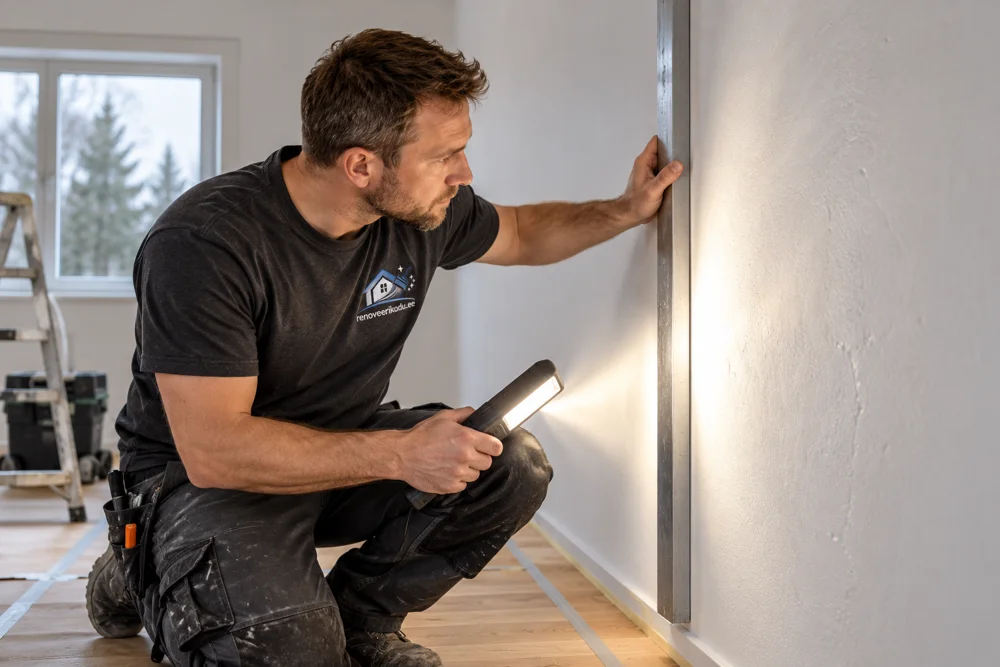
Substrate and primer
We remove old wallpaper and adhesive residue, repair cracks and fill the surface. Once dry, the surface is sanded and dust removed. A primer that evens out absorbency reduces overly rapid adhesive drying; under light-coloured wallpaper, a pigmented wallpaper primer helps prevent the substrate showing through.
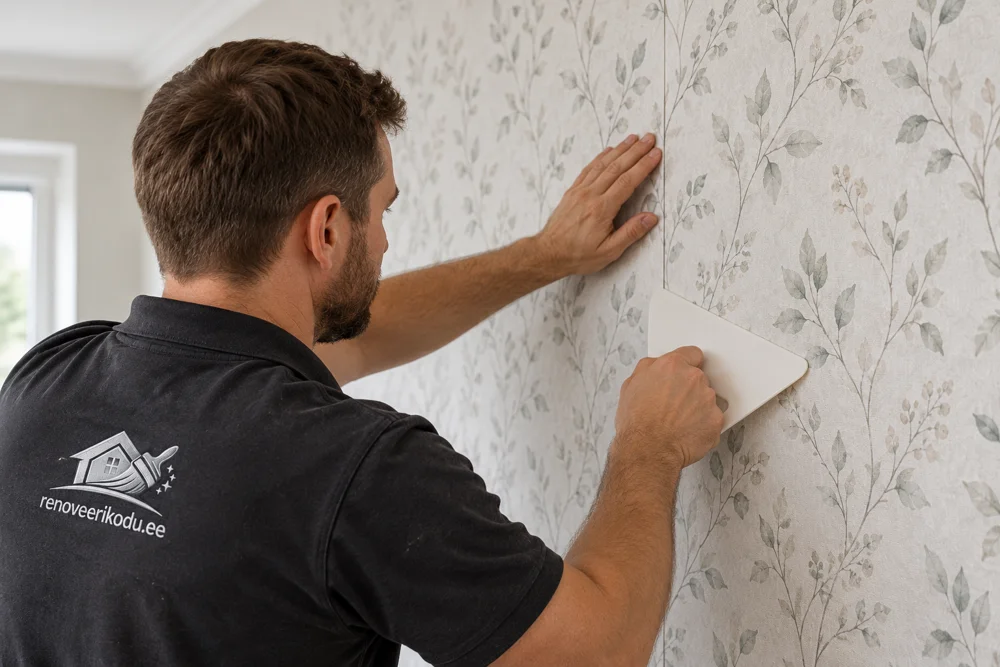
Drop and pattern layout
We measure the wall height and the roll's pattern repeat. Straight-match and offset-match patterns require different trimming allowances. We mark a plumb line for the first drop and plan the corners, windows and width of the last drop; dividing the wall area by the roll area does not always give the correct number of rolls.
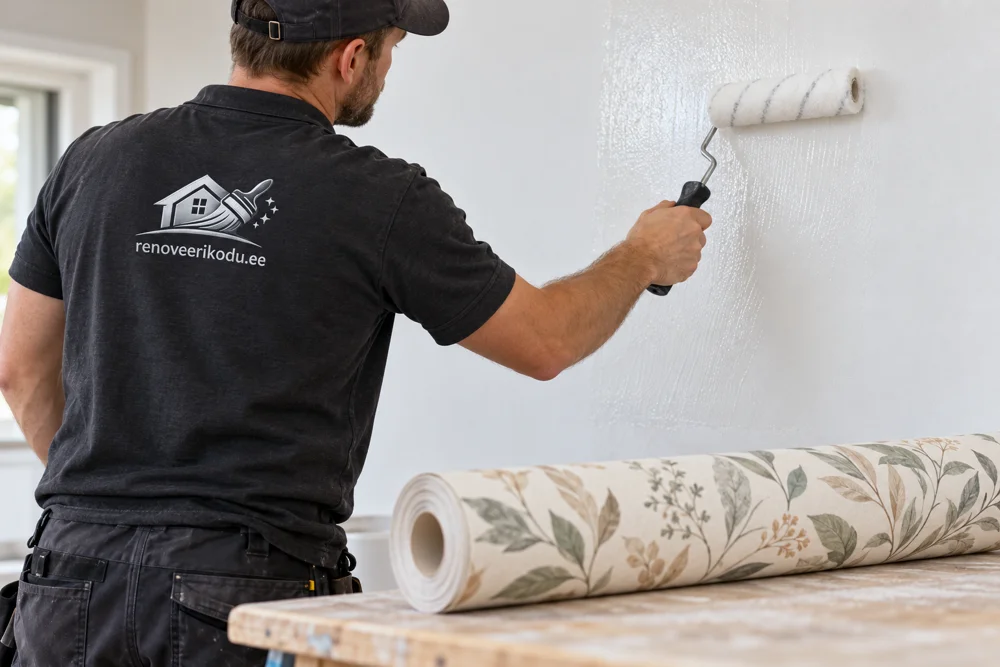
Gluing, cutting and drying
We apply the appropriate adhesive evenly, match the drops as required by the manufacturer and smooth from the centre towards the edges. We work safely around sockets with the power switched off. We gently clean off adhesive residue and let the wall dry at normal room temperature, avoiding strong draughts and forced heating. Drying time depends on the adhesive, covering and substrate.
For a quotation: Send the wall width and height, photos of the existing surface and the wallpaper roll label or product link. We can then account for the pattern repeat, removal of the old layer and the actual preparation needed, rather than just the area to cover.
Examples of wallpaper adhesives
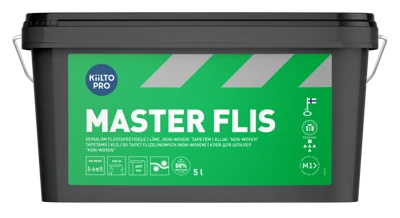
Kiilto Master Flis
Ready-to-use adhesive for dimensionally stable non-woven wallpaper; for paper wallpaper, follow the specified pre-soaking method. It is not a universal adhesive for all plastic or fibreglass coverings. We confirm the choice against the wallpaper instructions.
Manufacturer's instructions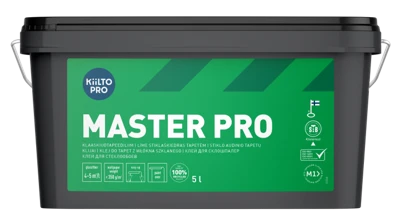
Kiilto Master Pro
An example of a stronger wall adhesive for different wall coverings. The composition of the backing and covering determines the application method: not all textile or vinyl coverings are installed in the same way. We always check the compatibility requirements of both manufacturers.
Manufacturer's instructionsThese products are possible options. Materials and quantities for your site will be specified in the quotation.
Frequently asked questions
Does the old wallpaper need to be removed?
Usually, yes. New wallpaper adheres best to a clean, stable substrate.
Is patterned wallpaper more difficult to install?
Yes, the pattern repeat increases time and material use because the drops need to be matched precisely.
Do you also create accent walls?
Yes, we install wallpaper both to highlight a single wall and throughout a room.
When can the room be used after wallpapering?
The room can usually be used soon afterwards, but excessive moisture and draughts should be avoided while it dries.
Must old wallpaper always be removed?
Usually, yes, especially if the old wallpaper is loose, dirty or in several layers. New wallpaper needs a strong substrate with uniform absorbency.
Can wallpaper be installed on a painted wall?
Yes, if the paint is firmly bonded and the surface is properly prepared. A glossy or very smooth surface may need dulling and priming.
Why can the wallpaper pattern become misaligned?
Possible causes include an incorrect starting line, an uneven wall, failing to account for the pattern repeat or stretching the wallpaper during installation.
Do you also install photo wallpaper?
Yes, but photo wallpaper requires a particularly precise substrate and drop sequence. A small error at the start can misalign the entire image.
Is completed work covered by a warranty?
Yes. Construction and finishing work completed by RK Meistrid OÜ is covered by a 3-year warranty. The scope of the work and agreed terms are recorded in the quotation.
What other work is wallpapering usually connected with?
Wallpapering needs a smooth, stable substrate, so before installation it is often important to carry out filling, sanding and priming. If the wall needs structural straightening, first complete plasterboard or partition wall work. In a coordinated decorative design, wallpaper can be combined with wall panels or acoustic panels.