Parquet repairs: hot wax and sanding
A small chip may need a local repair, while a uniformly worn floor may need sanding and a new finish.
Parquet chip repair with hot wax
Hot wax repair is primarily suitable for individual chips, small dents, deeper scratches and edge damage when the rest of the floor is stable and in good condition.
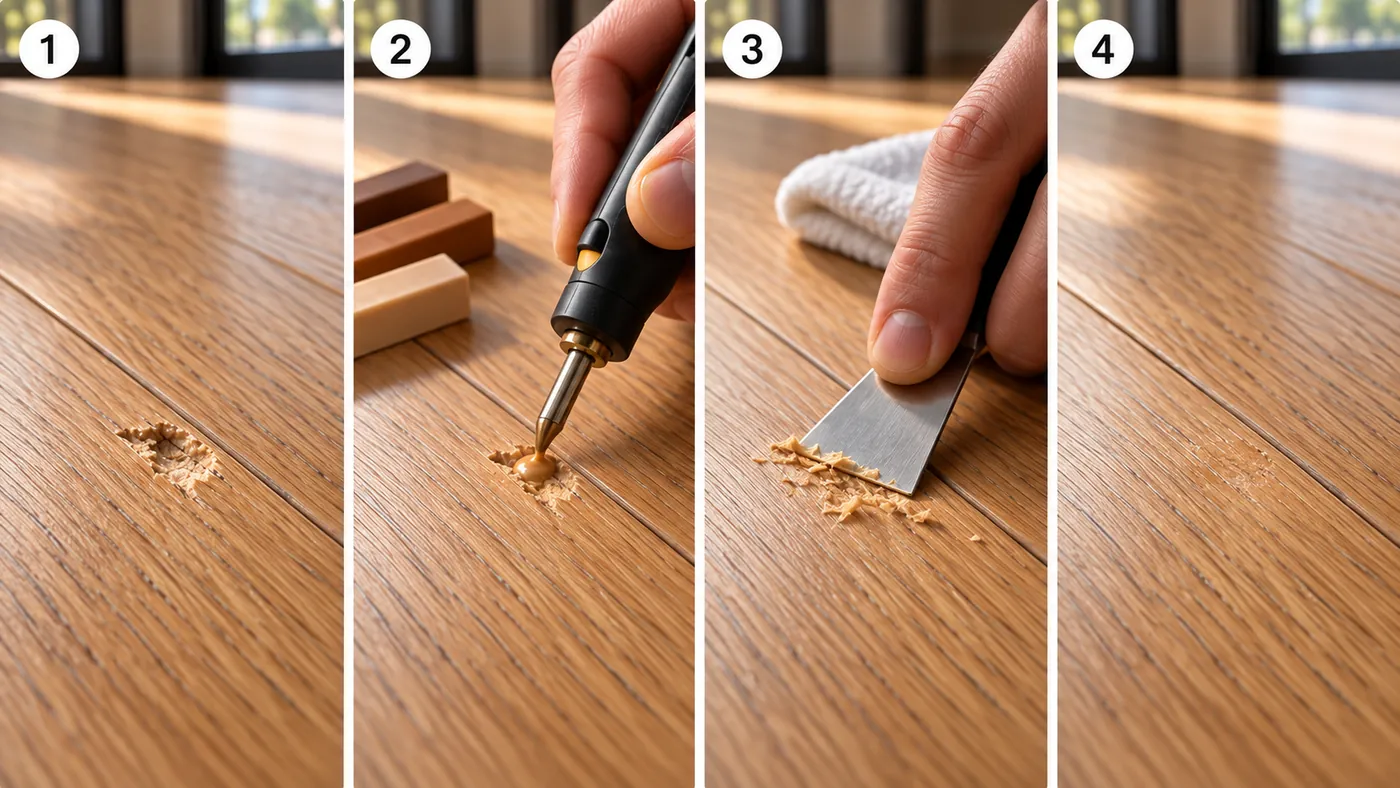
Hard wax in suitable colours is melted into the damaged area, levelled and finished to match the surrounding surface. Several colours are used where necessary to reduce the difference from the base colour and wood grain of the parquet.
Which types of damage can be repaired with hot wax?
- chips and small dents in parquet
- deeper scratches
- minor edge and corner damage
- individual damaged areas on an otherwise sound floor
Depending on the surface, the same technique can also be used on laminate and other finished wood surfaces. We assess suitability from a photo or a site inspection.
How does hot wax repair work?
- We clean the damaged area. We remove loose particles and dirt so the filler adheres properly.
- We mix a suitable colour. Where necessary, we use several wax colours to match the repair to the base colour and wood grain of the parquet.
- We melt the wax into the damaged area. Hard repair filler is melted into the chip with a special heating tool. This fills the damage densely and in a controlled manner.
- We level and finish the surface. Excess wax is removed, the surface is levelled and finishing reduces differences in wood grain and sheen.
What will the result look like?
The aim is to make the damage as inconspicuous as possible from a normal viewing distance and protect the exposed area from dirt and further wear.
The repaired area may not become completely invisible when viewed very closely, because the colour, grain and sheen of parquet can differ in the light. Before starting, we provide a realistic assessment of the result achievable for the specific damage.
When is hot wax not enough?
Hot wax does not solve structural problems in a floor. Another solution may be needed if a parquet board has broken through or become extensively detached, the floor has swollen from moisture, a board moves or a joint has failed. Restoring a larger area may also be more sensible where there are many damaged spots or a worn finish.
In that case, we explain honestly whether replacing the board, sanding the floor or choosing another solution makes more sense. If a new floor is needed, see our parquet installation service.
Parquet sanding and a new finish
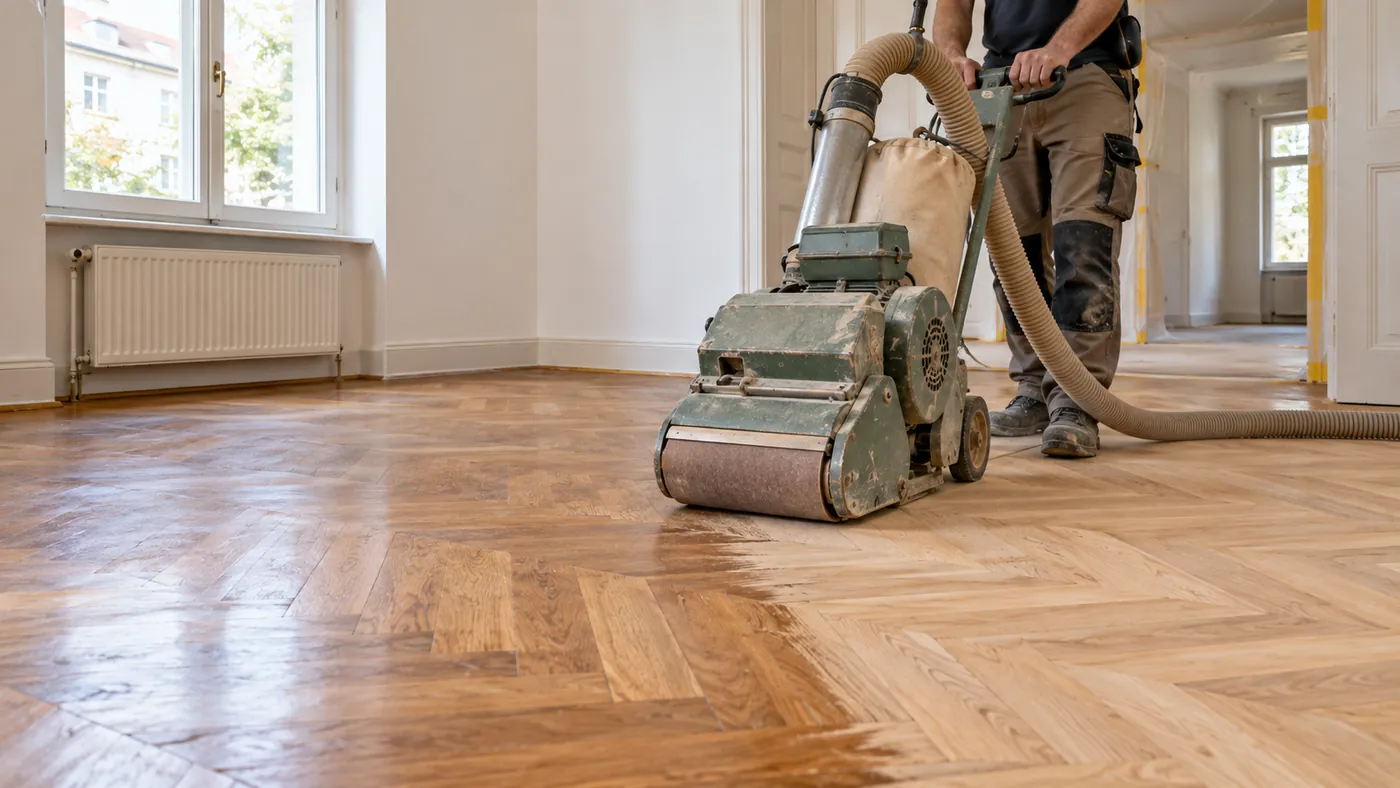
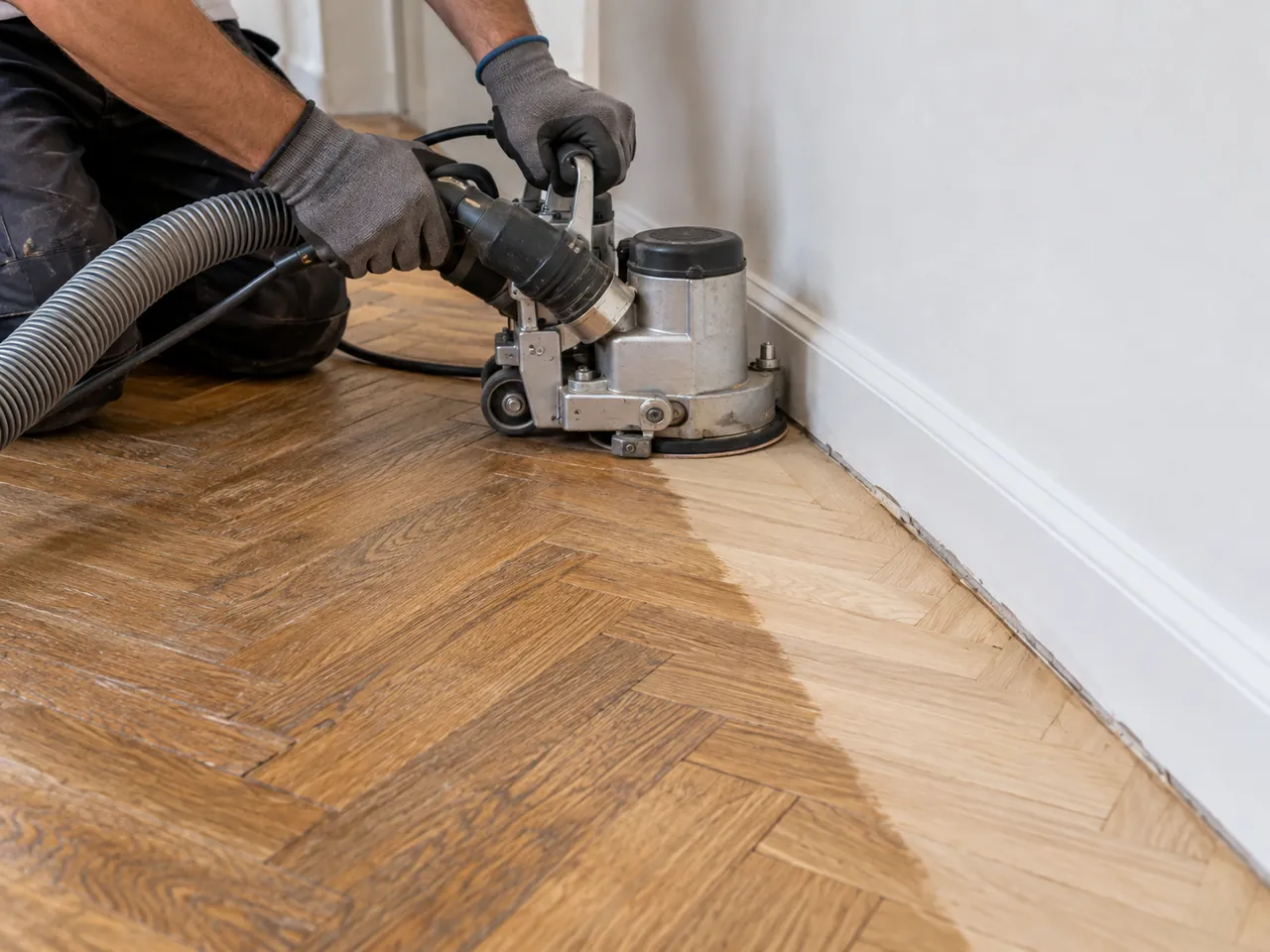
Sanding makes sense when scratches, wear paths, faded varnish or colour differences extend over a larger area. The work removes the old finish and a thin layer of wood, levels edges and applies new varnish, oil or another agreed finish.
Which parquet can be sanded?
Solid wood parquet
Generally suitable for sanding several times, but the remaining parquet thickness, board fixings, nails and extent of deep damage are checked before starting.
Engineered wood flooring
Sanding may be possible if the top hardwood wear layer is thick enough. The decision depends on the specific product and number of previous sanding operations, not just the total board thickness.
Mosaic and herringbone parquet
Often suitable for restoration if the pieces are firmly attached to the substrate and there is enough wood remaining. Loose or missing pieces are repaired before sanding the entire floor.
Laminate and LVT
These are not sanded because sanding would remove the top decorative or wear layer. Suitable options are local repair, replacing an individual element or installing a new floor covering.
What needs checking before sanding?
- whether the floor moves, creaks or has detached from the substrate;
- the thickness of the remaining hardwood wear layer;
- whether the floor has been sanded before and how deep the damage is;
- whether the cause of moisture damage, a black stain or swelling has been removed;
- the desired colour, sheen and maintenance method after finishing.
What should I consider with a local repair?
Local repair preserves the rest of the floor, but new filler or finish may differ from the surrounding colour and sheen in side lighting. An oiled floor may allow a softer local transition; on a varnished surface, the boundary between old and new varnish is often more demanding.
If one board is damaged, replacing it may be the best solution. If wear or scratches cover much of the room, sanding the entire continuous surface usually produces a more even result than treating several small areas separately. The cause of a moving board, moisture or a loose substrate must be resolved before cosmetic repair.
Flooring prices
- Floating parquet installation from 13 €/m².
- Glued herringbone parquet installation from 25 €/m².
Request an assessment from a photo
Send one close-up of the damage and one photo from farther away so we can also see the overall floor colour. If possible, include the approximate size of the damage, flooring material, property location and number of areas needing repair.
From photos, we can say whether hot wax repair is suitable and what result to expect. Where necessary, we refine the scope of work on site.
When does hot wax help, and when is another solution needed?
Filler and protective finish
Hard repair wax fills a local chip but does not secure a loose parquet board or repair a moisture-swollen substrate. We select a colour blend and imitate the wood grain where possible. The protective finish must be compatible with the existing oil or varnish; we assess the result in normal room lighting.
Maintenance wax is not a filling wax
Liquid maintenance wax for oiled floors refreshes the surface but does not replace filling a deep hole with hot wax. Parquet joint sealant is also not intended to repair every visible chip. The material is chosen according to the damage and finish, rather than just the word “wax” on the packaging.
Sanding or board replacement
Extensive wear may require sanding the entire surface if the wood layer thickness allows it. Damage through the board, a broken locking joint or water damage may require replacing the board and removing the cause. Laminate is not sanded in the same way as natural parquet.
For a quotation: Include a close-up of the damage and a wider photo of the floor, along with the parquet product name if possible. State whether the floor is varnished or oiled and whether the damage was caused by impact or moisture.
Frequently asked questions
Will the repaired area be completely invisible?
The aim is to match the repair colour and pattern to the existing floor as closely as possible. From a normal viewing distance, the area is usually barely noticeable, but a difference may be visible up close or in side lighting.
Does the floor need to be lifted for the repair?
Usually not for a local hot wax repair. The work is carried out directly on the damaged area.
How long does the repair take?
The time required depends on the number and size of damaged areas and the complexity of colour matching. Repairing a small individual chip is usually considerably faster than replacing a parquet board.
Can hot wax also be used to repair laminate?
Often, yes. The result depends on the laminate surface pattern, colour and location of the damage. We assess suitability from a photo.
Which parquet can be sanded?
Solid wood parquet and engineered parquet with a sufficiently thick wood wear layer can generally be sanded. Before starting, we check the wear layer thickness, previous sanding, board fixings and depth of damage.
Can laminate or LVT flooring be sanded?
No. The top decorative or wear layer of laminate and LVT is not designed for sanding. Depending on the damage, local repair or replacement of an individual element is suitable.