Wall panel installation in Tallinn
Precise installation of decorative, acoustic and MDF panels.
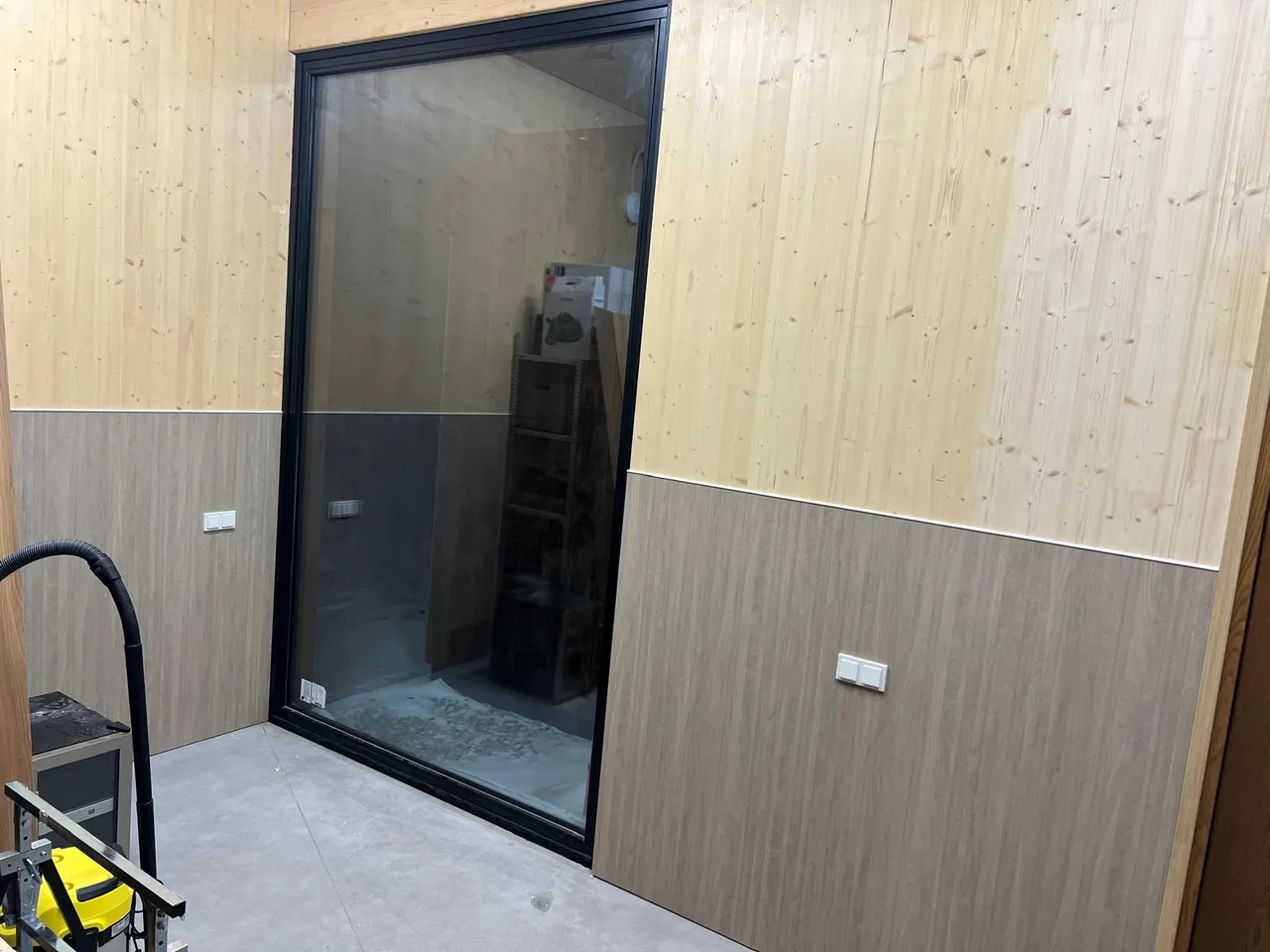
When installing decorative and acoustic wall panels, we check substrate flatness, panel dimensions, pattern continuity and the finish around sockets and corners. The layout is agreed before fixing.
Wall panels quickly give a room a new look, but installation must be precise to keep joints, corners and cuts neat. We install decorative and acoustic panels, MDF mouldings and other wall coverings in homes and commercial premises.
Before starting work, we assess wall flatness, the panel fixing method and how to finish sockets, mouldings and corners. This ensures an attractive, durable result.
What does the service include?
- acoustic wall panel installation
- installation of MDF and decorative mouldings
- precise cuts for sockets, corners and edges
- backing wall preparation and final finishing
When should you book this service?
Wall panels are often used to accent a TV wall, a bedroom headboard, office acoustics or an entrance hall. Good installation makes the solution part of the interior design rather than a temporary addition.
Work process
Measuring
We measure the wall, determine the panel layout and agree on the locations of visible cuts and edges.
Substrate preparation
We check whether the wall needs levelling or priming so that the adhesive or fixings perform as intended.
Installation
We install the panels straight, finish the edges and check that the pattern or slat lines remain consistent.
Panel installation scope and details
The price of wall panel installation depends on the wall dimensions, panel type, number of cuts and the work required around sockets, switches, window reveals and corner joints. For acoustic panels, it also matters whether the aim is simply a decorative wall or improved room acoustics.
Before handover, we check panel alignment, pattern continuity, clean edges and the stability of the fixings. If LED lighting or painting work is requested alongside the panels, it is worth planning these in the same work sequence to achieve a cohesive result.
Local experience and agreeing the scope of work
Wall panel installation works well when the panels are coordinated with the room dimensions, furniture and lighting before the cut lines are decided. When assessing an enquiry, we always review site access, whether the room is occupied, which surfaces need protection and a sensible work sequence. This helps prevent a stage from having to be reopened or repaired later.
Before starting, we provide a clear, realistic estimate. If photos are not enough, we arrange a site visit. This lets us agree on materials, timing, related work and potential risks before the project begins.
Wall panel installation prices
The price of wall panel installation depends on the panel type, wall dimensions, cuts, sockets and edge finishing. For acoustic panels, the desired acoustic result and panel layout on the wall also affect the work involved.
For a faster quotation, please include photos, measurements, the site location and your preferred deadline where possible. This helps us determine whether a site visit is needed or an initial estimate can be based on your description.
Practical information about wall panel installation
Materials
Wall panel installation requires consideration of panel type, fixings, substrate flatness and edge finishing. Acoustic panels, MDF mouldings and decorative panels require different cutting and fixing methods.
Time required
The time required depends on the number of cuts, sockets and corners, and whether the wall needs repair or painting beforehand. A flat accent wall is completed faster than a design with several penetrations and edges.
Pricing factors
The price is affected by panel material, wall size, substrate condition, the number of visible edges, electrical points and whether lighting is to be installed behind or alongside the panels.
Common mistakes
Common mistakes include ignoring wall unevenness, choosing the starting line without planning, untidy socket cut-outs and installing panels before dusty work is complete.
Advice for customers
Before ordering, measure the wall, mark the sockets and decide whether the panel should end in line with the ceiling, floor or furniture. This helps avoid awkward cuts and visually random edges.
Wall panel material and fixing method
Acoustic slat panels
Wooden slats on felt mainly reduce reverberation in a room; they do not automatically soundproof the wall against a neighbour. Sound absorption depends on the specific product and installation. Battens and mineral wool infill approved by the manufacturer may improve the result, but also increase the wall thickness.
MDF, veneer and solid wood
MDF provides a uniform surface, veneer a natural wood grain and solid wood a distinctive material feel. Wood-based materials need to acclimatise to the room and have the movement allowance specified in the instructions. Standard MDF is unsuitable for damp locations unless the manufacturer permits that use.
Adhesive, screws or battens
Adhesive is suitable only for a sufficiently strong substrate of a compatible composition; loose paint is not a load-bearing layer. The choice of screws and wall plugs depends on the wall and panel weight. Battens help correct the plane and conceal wiring, but sockets and connections must remain serviceable.
Panelled wall preparation and finishing
Layout before cutting
We measure the wall, mark the panel layout and check the width of the end panels. We coordinate the slat rhythm with corners, sockets and furniture. LED profile locations must be planned before fixing the panels.
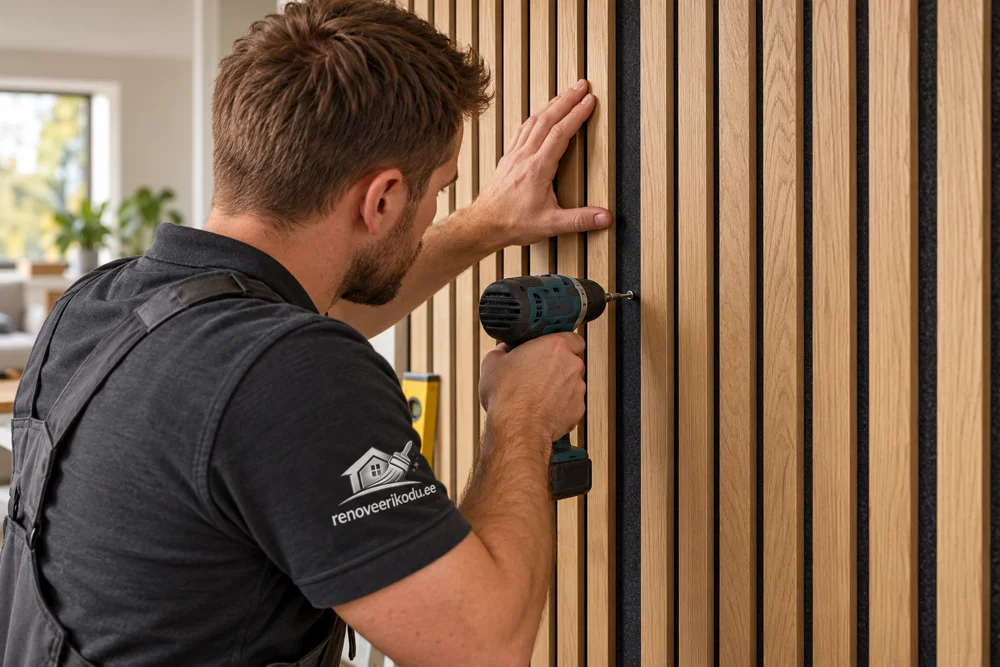
Substrate and installation
We check wall flatness, moisture and adhesion. We fix the panels using the selected system, maintaining consistent spacing at the joints. When cutting, we protect the visible veneer and make a test cut to avoid tearing the edge.
Edges and putting into use
We finish corners and ends with suitable profiles or details. Adhesive fixings are not loaded before the specified curing time. Maintenance depends on the surface finish: cleaning with a damp cloth cannot be recommended equally for all wooden panels.
For a quotation: Send the wall dimensions, a product link for the selected panel and photos of sockets and corners. Specify whether you want a decorative wall, reduced reverberation or lighting integrated with the panels.
Frequently asked questions
Can panels be installed on an uneven wall?
Minor unevenness can be compensated for, but a very uneven wall needs levelling or a supporting frame first.
Do you make cut-outs for sockets?
Yes, we plan and cut the openings so the panel remains functional and looks neat.
Do acoustic panels improve the sound?
They can reduce echo and make a room more comfortable, but full sound insulation requires a separate solution.
Can LED lighting be installed behind the panels?
Yes, if it is planned together with the wiring and profiles before final installation.
Does the wall need to be perfectly flat before panel installation?
The larger and more rigid the panel, the more important a flat substrate becomes. Minor unevenness may remain hidden, but a crooked wall can cause visible gaps and stress in the panel.
Can panels be installed on a painted wall?
Yes, if the paint layer is sound and the surface is clean. Loose paint, dust or moisture damage must be removed before installation.
How are sockets integrated into the panels?
Socket positions are measured before cutting. An electrician may need to be involved, especially if the socket position or depth changes.
Do acoustic panels really improve the sound?
They help reduce echo and soften a room's acoustics, but do not replace full sound insulation. The result depends on the room size, surfaces and number of panels.
Is completed work covered by a warranty?
Yes. Construction and finishing work completed by RK Meistrid OÜ is covered by a 3-year warranty. The scope of the work and agreed terms are recorded in the quotation.
What other work is wall panel installation usually connected with?
Wall panel installation depends on substrate flatness and the room's overall finish. Before fitting the panels, you may need wall repairs and a painted backing surface, and for illuminated designs it is worth planning the position of LED lighting alongside the panels. If the wall is uneven or needs a supporting structure, a solution is a flat substrate created with plasterboard work.